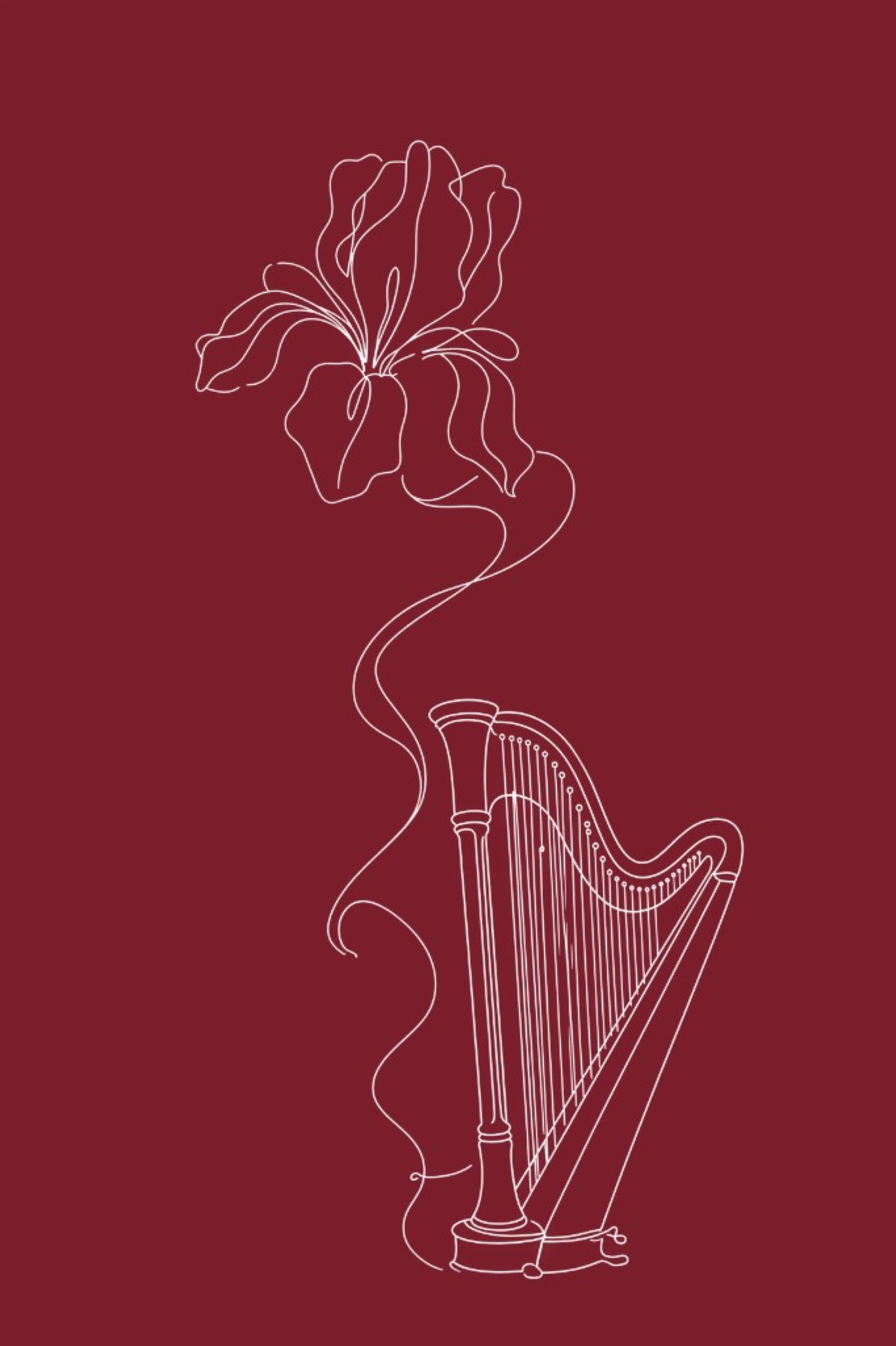

帕薩卡利亞(Passacaglia)是一種起源於17世紀初西班牙的古典音樂「變奏曲式」與特定低音行進的音樂形式。音樂開始時柔和地前進,好像輕盈的白色小花。白色掌則象徵舞者,在不同旋律中遊走,跟著音樂向前推進,那種加速跳動的感覺,明朗音調,就如強烈紅色玫瑰踫上暗冷藍色飛燕草,形成冷暖視覺衝擊。完美對應了音樂中明暗調性交替、強弱對比(Dynamics)以及對位法所帶來的張力與衝突。像舞者前行來回不斷,仿如舞者不斷跳躍其中,恰似絲帶不斷地繚繞其中;這正呼應了帕薩卡利亞「循環往復」的曲式本質。音樂在一次次的變奏中疊加能量,豐富了整首樂曲的層次。
The Passacaglia is a musical form—originating in early 17th-century Spain—characterized by a specific bass progression and a variation structure. The music begins gently, unfolding like delicate white blossoms. These white forms symbolize dancers moving through shifting melodies and advancing with the rhythm; the sensation of accelerating movement and the bright tonality evoke the striking visual contrast between a vibrant red rose and a cool blue larkspur. This perfectly mirrors the musical interplay of light and dark tonalities, dynamic contrasts, and the tension and conflict inherent in counterpoint. The dancers’ continuous, back-and-forth movement—leaping and weaving like a ribbon—echoes the Passacaglia’s cyclical nature. As the piece progresses through successive variations, the music accumulates energy, enriching the composition's overall depth and texture.